

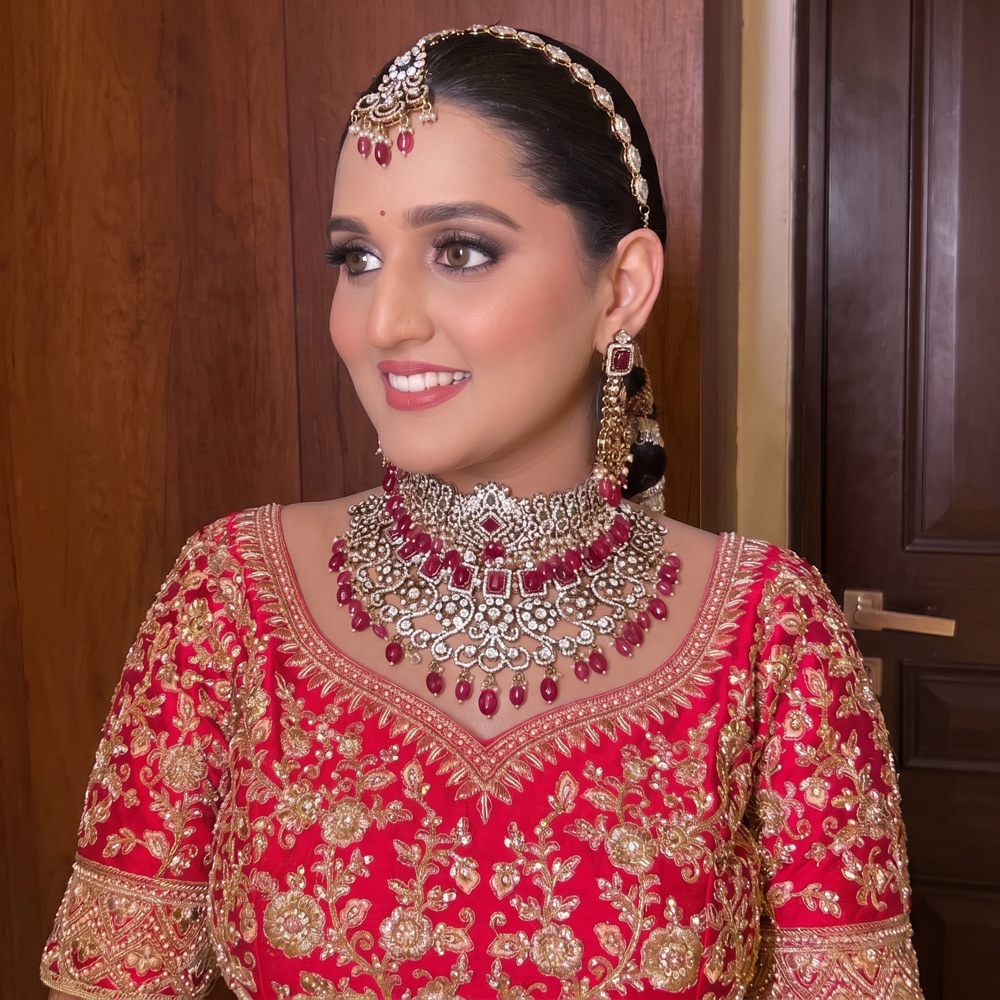
There are weddings where I apply the look at 8 AM and the bride walks into her Bidaai at 11 PM. That's fifteen hours. The makeup needs to tell the same story at the end that it told at the beginning — even after hugs, tears, dancing, and an outdoor ceremony under Delhi heat.
Here's what makes that possible.
The base does 80% of the work
Long days begin with a foundation that's been matched not just for colour but for finish and formula. On a bride who sweats, a full-coverage cream foundation will break down by afternoon regardless of setting. We use airbrush or HD formulas that bond differently to skin — lighter, more flexible, resistant to movement and moisture. The coverage is equal or better, but the longevity is far superior.
Layers, not volume
The instinct is to apply more product to make something last. The opposite is true. Thin, well-set layers outlast thick ones every time. We build coverage in passes — foundation, press with a damp sponge, set with powder, press again, setting spray — rather than one heavy application. Each layer extends the life of the one beneath it.
Eyes that hold through tears
Bidaai is emotional. Every bride knows this. We always use waterproof liner, waterproof mascara, and a waterproof eye primer underneath the shadow. The shadow itself is powder — powder over cream, not cream over cream. If she cries, it holds. That's not an accident.
The mid-day check-in
On long-day weddings I stay on-site or arrange to return for a 3 PM refresh — not a redo, just a press of the nose, a light dust of translucent powder, and a lip reapplication. Five minutes. The difference in photographs between a look that's been refreshed and one that hasn't is immediately visible.
The Bidaai photographs
These are often the most emotional images from the entire wedding. The makeup needs to be intact — not perfect in a stiff way, but still present, still elegant, still the bride as she should look on the most important day of her life. When we get the setting right, it is.
If you're planning a multi-event wedding day and want to talk through how we approach the timeline, reach out. Getting this right takes planning — and planning takes an early conversation.
