

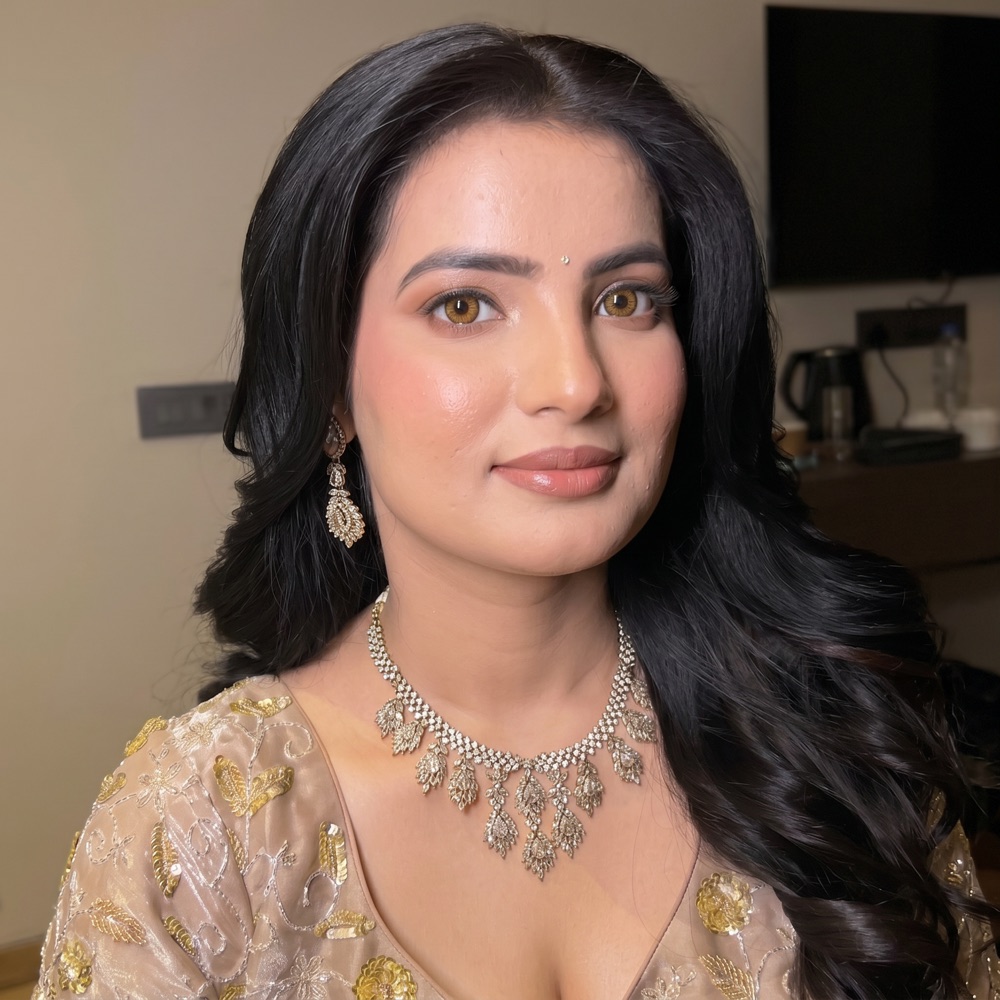
Foundation shade matching is the single most important skill in bridal makeup — and also the one most likely to go wrong when it's done quickly or without proper natural light. For Indian skin tones especially, the range of depth, undertone, and surface variation makes this a decision worth understanding properly.
Depth versus undertone — know the difference
Depth is how light or dark your skin is. Undertone is the colour beneath the surface — and the two can be very different. A medium-deep complexion can carry warm golden undertones or cool pink ones. Getting the depth right but the undertone wrong produces a foundation that looks off in every photograph, even if it matches in the mirror.
Most Indian skin sits warm to neutral
The majority of South Asian skin tones carry warm undertones — yellow, golden, or peachy. A small proportion are neutral (neither warm nor cool), and a smaller group still carry distinctly cool undertones. The mistake many brides make — or that inexperienced artists make — is defaulting to neutral-pink foundations, which pull grey and ashy on warm-toned skin, particularly in photographs.
The jawline test is not enough
Testing foundation on the wrist tells you nothing useful. Testing on the jawline is better — but only if you check it after five minutes, in natural daylight, and compare it to both the face and the neck. A match that looks good indoors under yellow lighting will often look wrong outside. We always test in the doorway or near a window.
Bridal wear changes everything
The colour of your lehenga or saree will affect how your foundation reads on camera. Deep red and jewel tones make warm foundations pop beautifully. Pale golds and creams sometimes need a slightly different finish to avoid looking flat. This is one of many reasons a trial — with your actual outfit colour in mind — produces a far better result than deciding on the day.
Photography versus in-person
Flash photography can add a white cast to some foundations, especially those with SPF. We always use flash-friendly formulas for bridal work, and we account for the difference between how you'll look under the mandap, in reception lighting, and in your photographer's shots.
Shade matching is something we do carefully at every trial. If you want to discuss your skin tone before booking, reach out — it's a conversation worth having early.
